3 AI Gadgets That Enhance Everyday Commuting
Explore 3 cutting-edge AI gadgets designed to make your daily commute smoother and more enjoyable. From smart navigation to traffic prediction.
3 AI Gadgets That Enhance Everyday Commuting
Discover the 3 cutting-edge AI gadgets designed to make your daily commute smoother and more enjoyable. From smart navigation to traffic prediction.
The Commute Challenge AI Gadgets Can Solve
The daily commute. For many, it's a necessary evil, a time sink that drains energy before the workday even begins and adds stress on the way home. Whether you're navigating bustling city streets, enduring long highway stretches, or relying on public transport, the commute presents a unique set of challenges. Traffic jams, unpredictable delays, finding parking, staying entertained, and even ensuring personal safety are all common pain points. But what if technology, specifically Artificial Intelligence (AI), could transform this often-dreaded part of our day? AI is no longer confined to futuristic concepts; it's actively shaping our present, and a growing number of innovative gadgets are leveraging its power to make our commutes more efficient, less stressful, and even enjoyable. This article dives into three types of AI-powered gadgets that are revolutionizing the way we travel to and from work, offering smart navigation, intelligent traffic management, and enhanced convenience.
Smart Navigation Devices AI Powered Navigation Redefined
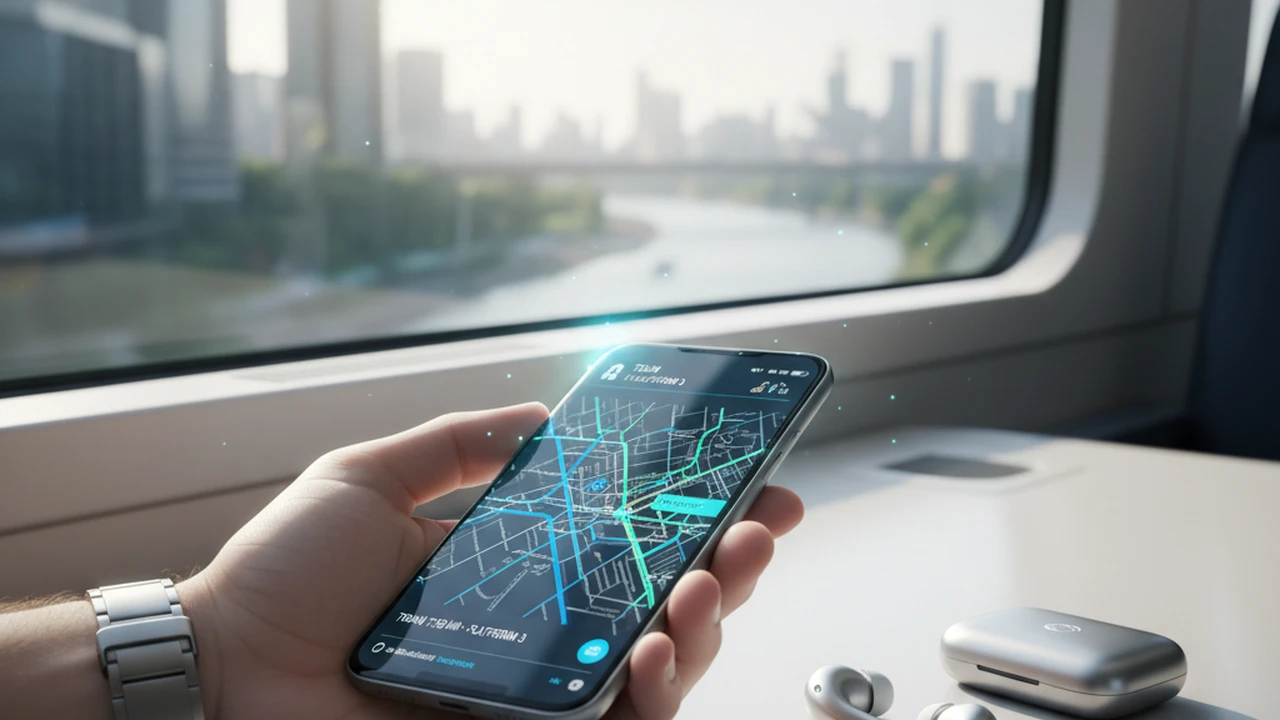
Gone are the days of fumbling with paper maps or relying solely on basic GPS. AI has taken navigation to a whole new level, offering predictive capabilities and real-time, dynamic routing that adapts to the ever-changing road conditions. These smart navigation devices go beyond simply showing you the fastest route; they learn your driving habits, anticipate potential issues, and provide a more intuitive and personalized navigation experience.
Waze A Community Driven Navigation Powerhouse
While not a standalone gadget in the traditional sense, Waze is a prime example of AI in action for navigation, accessible via your smartphone. Its power lies in its vast community of users who actively report real-time traffic conditions, accidents, police presence, road hazards, and even gas prices. The AI algorithms within Waze process this crowdsourced data instantaneously to provide the most up-to-the-minute, optimized routes. It dynamically reroutes you if a faster path becomes available, saving you precious time and frustration. Waze also learns your common routes and driving patterns, offering proactive suggestions and alerts.
- Key AI Features: Real-time traffic analysis, predictive routing, crowdsourced data processing, user behavior learning, hazard alerts.
- Use Cases: Daily commuting in urban and suburban areas, navigating unfamiliar cities, avoiding traffic jams, finding the quickest route during peak hours.
- Comparison: Unlike traditional GPS devices that rely on pre-programmed map data, Waze's strength is its real-time, dynamic information fed by its user base. Google Maps also incorporates AI for navigation and traffic, but Waze often excels in hyper-local, real-time alerts due to its dedicated community focus.
- Price: Free (requires a smartphone and data plan).
Garmin DriveSmart Series Advanced GPS Navigation
Garmin's DriveSmart series represents a step up in dedicated navigation hardware, integrating AI features for a more sophisticated driving experience. These devices offer advanced features like real-time traffic updates (often through a subscription service or integrated traffic receiver), voice control for hands-free operation, and smart notifications that can display calls, texts, and app alerts from your paired smartphone. The AI comes into play with features like predictive traffic, which forecasts potential congestion based on historical data and current conditions, and driver alerts for sharp curves, speed limit changes, and school zones.
- Key AI Features: Predictive traffic, voice command recognition, smart notifications, driver alerts, points of interest (POI) suggestions based on your route and time of day.
- Use Cases: Long-distance driving, business travel, navigating areas with poor cellular reception (as maps can be downloaded), drivers who prefer a dedicated device over a smartphone app.
- Comparison: Offers a more robust hardware solution than a smartphone app, with larger screens and often better GPS reception. While it uses AI for prediction and alerts, it lacks the real-time, crowdsourced data intensity of Waze.
- Price: Varies by model, typically ranging from $150 to $300+.
Intelligent Traffic Management Devices AI Predictive Traffic Solutions
Beyond personal navigation, AI is also being used in devices and systems designed to manage traffic flow more broadly, indirectly benefiting individual commuters. While many of these are infrastructure-level solutions, some personal devices are beginning to incorporate elements of this intelligence.
Smart Dash Cams with AI Incident Detection
Modern dashcams are evolving beyond simple recording devices. Many now incorporate AI-powered features for incident detection and driver assistance. These AI systems can analyze video feeds in real-time to detect potential collisions, lane departures, or even driver fatigue. Some advanced models can also integrate with traffic data to provide warnings about upcoming hazards or congestion. While their primary function is recording, the AI adds a layer of proactive safety and awareness.
- Key AI Features: Lane departure warning, forward collision warning, pedestrian detection, AI-powered event recording and analysis, potential integration with real-time traffic data.
- Use Cases: Enhancing safety during commutes, providing evidence in case of accidents, alerting drivers to potential dangers on the road, monitoring driving behavior.
- Comparison: These devices offer driver assistance features that go beyond basic recording. While not directly controlling your route like a navigation app, they provide crucial real-time alerts that can help avoid situations that would lead to traffic delays or accidents.
- Price: Varies widely, from $50 for basic models to $300+ for advanced AI-equipped dashcams.
Connected Car AI Features Built-in Intelligence
Many new vehicles are now equipped with sophisticated AI systems that manage various aspects of the driving experience, including traffic awareness. Features like adaptive cruise control with stop-and-go functionality use AI to maintain a safe distance from the car ahead, automatically braking and accelerating in traffic. Predictive navigation systems within the car's infotainment system can analyze traffic patterns, suggest optimal departure times, and reroute dynamically. Some high-end systems even use AI to predict traffic light timings or identify potential hazards based on sensor data from other vehicles.
- Key AI Features: Adaptive cruise control, predictive navigation, traffic light prediction (in some models), real-time hazard identification, driver fatigue monitoring.
- Use Cases: Reducing driving fatigue in heavy traffic, improving safety, optimizing travel time, providing a more seamless and less stressful driving experience.
- Comparison: Integrated directly into the vehicle, these systems offer a seamless experience. They often leverage a combination of onboard sensors, GPS data, and cloud-based AI. The level of sophistication varies greatly by manufacturer and model.
- Price: Included as part of the vehicle's purchase price; advanced AI features are typically found in higher trim levels or luxury models.
Convenience and Comfort Gadgets AI Enhancing the Commute Experience
Beyond navigation and traffic management, AI is also finding its way into gadgets that simply make the commute more comfortable and convenient, turning dead time into productive or relaxing time.
Smart Personal Assistants Voice Controlled Access
Devices like Amazon Echo Auto or Google Assistant integration in car systems allow you to use voice commands to control music, make calls, send messages, get weather updates, and even control smart home devices remotely – all while keeping your hands on the wheel and eyes on the road. The AI behind these assistants understands natural language, making interaction seamless and safe.
- Key AI Features: Natural language processing, voice command recognition, integration with various apps and services, smart home control.
- Use Cases: Hands-free communication, controlling entertainment, getting quick information (weather, news), managing tasks without taking hands off the wheel.
- Comparison: Significantly enhances convenience and safety compared to manually operating a phone or infotainment system. It transforms the car into a more connected and responsive environment.
- Price: Echo Auto is around $50, while Google Assistant integration is often built into newer car models.
AI-Powered Noise-Cancelling Headphones Adaptive Soundscapes
For commuters on public transport or those seeking focus in a noisy car, AI-powered noise-cancelling headphones offer a sanctuary. These headphones use AI algorithms to analyze ambient noise and generate anti-noise frequencies to cancel it out effectively. Some advanced models can even adapt the level of noise cancellation based on your environment or allow specific sounds (like announcements) to pass through while blocking others. This creates a more immersive audio experience for music, podcasts, or simply a quieter environment for work or relaxation.
- Key AI Features: Adaptive noise cancellation, environmental sound analysis, personalized audio profiles, voice assistant integration.
- Use Cases: Blocking out commute noise on trains, buses, or planes; creating a focused environment for work or study during the commute; enjoying music or podcasts without distraction.
- Comparison: Offers a significant upgrade over traditional noise-cancelling headphones by intelligently adapting to the user's surroundings. Provides a more personalized and effective noise-blocking experience.
- Price: High-end AI-powered noise-cancelling headphones typically range from $200 to $400+. Examples include Sony WH-1000XM series and Bose QuietComfort series.
Smart Wearables for Commute Insights
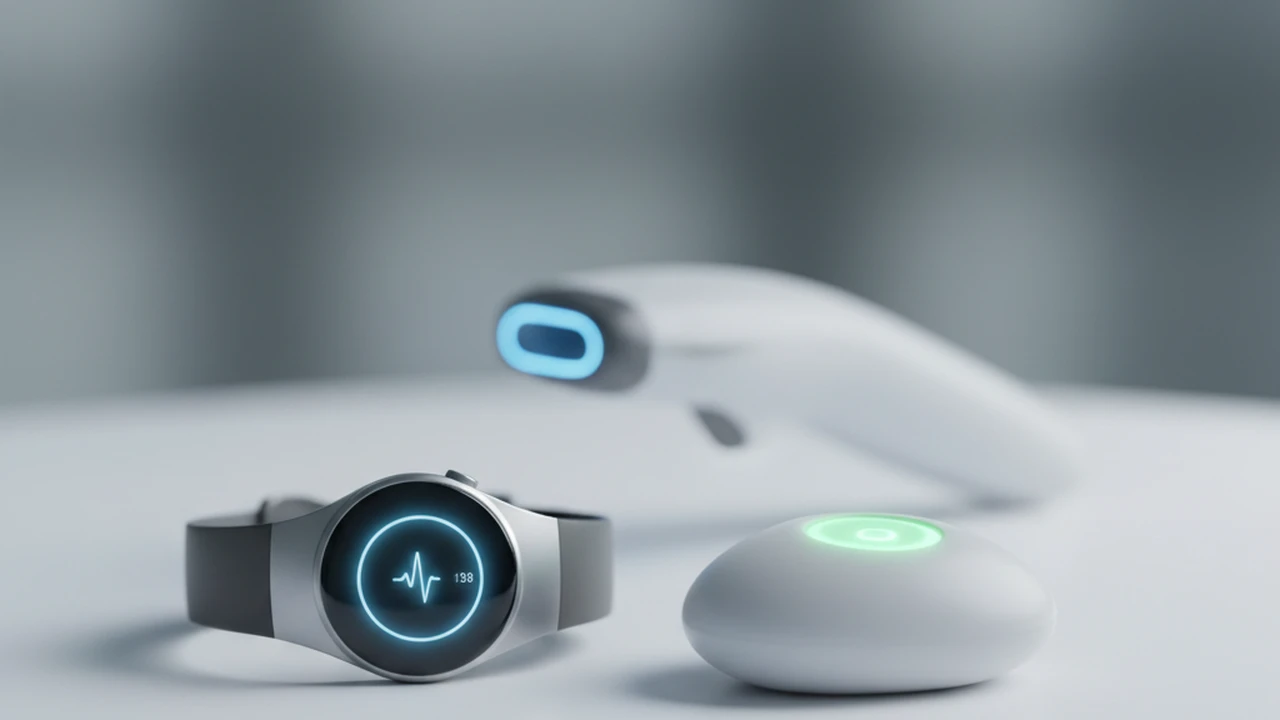
While not directly controlling your commute, smartwatches and fitness trackers with AI capabilities can provide valuable insights. They can track your activity levels during the commute (e.g., walking to the station), monitor stress levels through heart rate variability, and even provide notifications for public transport delays if integrated with relevant apps. Some advanced wearables can also offer posture analysis, which can be beneficial if you spend long hours sitting during your commute.
- Key AI Features: Activity tracking, heart rate monitoring, stress level analysis, notification integration, potential posture analysis.
- Use Cases: Monitoring physical activity during commute, managing stress, staying informed about transport updates, promoting healthier habits even during travel.
- Comparison: Provides personal health and activity data that can indirectly influence commute choices or well-being. It complements other commute-focused gadgets by offering a holistic view of your day.
- Price: Smartwatches and advanced fitness trackers range from $100 to $500+.
Making Your Commute Smarter and Smoother
The integration of AI into everyday gadgets is transforming the often-mundane commute into a more manageable, productive, and even pleasant experience. From navigation systems that predict traffic with uncanny accuracy to noise-cancelling headphones that create a personal oasis of calm, these technologies are empowering commuters. By leveraging AI, we can reclaim lost time, reduce stress, and arrive at our destinations feeling more prepared and less frazzled. As AI continues to evolve, we can expect even more innovative solutions to emerge, further enhancing our daily journeys.
:max_bytes(150000):strip_icc()/277019-baked-pork-chops-with-cream-of-mushroom-soup-DDMFS-beauty-4x3-BG-7505-5762b731cf30447d9cbbbbbf387beafa.jpg)